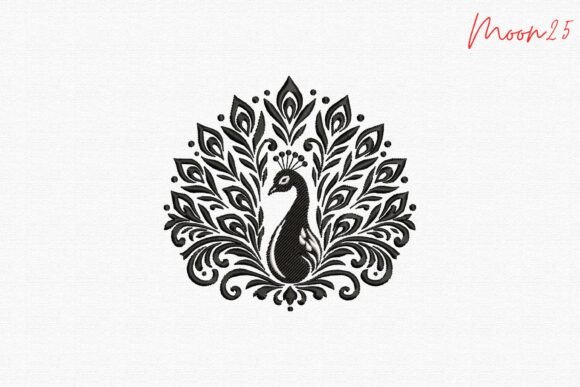
Royal Peacock Feather Mandala Motif Art
A Designer’s First Glance: Grace, Not Gimmick
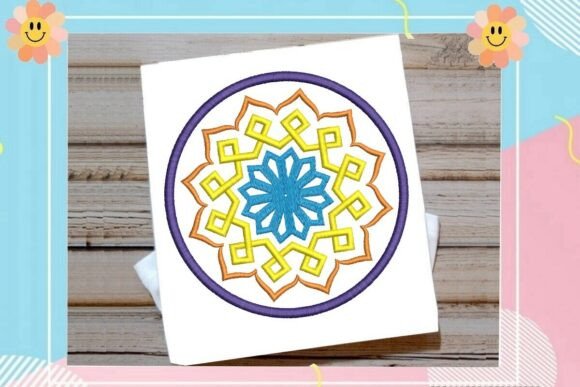
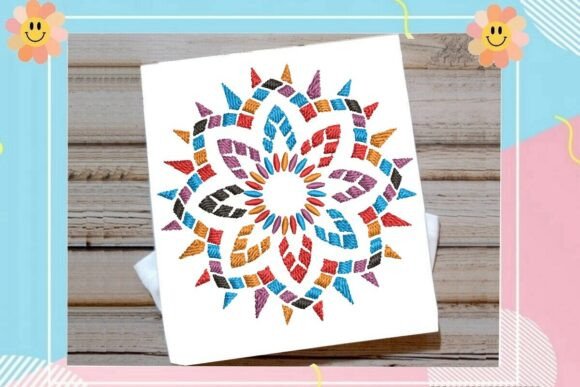
When I opened the Royal Peacock Feather Mandala Motif Art, my instinct wasn’t to scroll or skim — it was to pause. This isn’t a busy filler design masquerading as art. It breathes symmetry and intention: layered feather vanes radiating from a central eye, softened with organic curves and subtle negative space. The mandala structure gives it rhythm; the peacock motif adds regal warmth. It feels like heirloom embroidery — not trendy, but timeless. As a designer who’s stitched hundreds of motifs for client projects, I immediately saw where it would land best: on pieces meant to be touched, gifted, and kept.
Real Project Test: A Linen Tote Bag for a Boutique Launch
Last week, I prepped a small-batch run of heavyweight linen tote bags for a local botanical apothecary. Their brand leans into quiet luxury — think dried florals, ceramic mugs, hand-poured candles. I chose the Royal Peacock Feather Mandala Motif Art for the front panel, centered just below the strap seam. Why? Because it holds attention without shouting. On natural linen, the design didn’t compete with texture — it complemented it. The feather’s graceful arcs translated beautifully in satin stitch, and the inner mandala details held up even at 4.5 inches wide. Customers paused mid-aisle. One asked, “Is that hand-drawn?” That’s the signal: when people assume handwork, your machine embroidery is doing its job right.
Where It Shines (and Where It Asks for Care)
The Royal Peacock Feather Mandala Motif Art excels in medium-to-large applications: sweatshirt backs, pillow covers, tea towel hems, baby blanket corners, and embroidered patches meant for jackets or backpacks. Its balanced density works well on stable fabrics — cotton twill, medium-weight denim, quilting cotton, and structured knits. For custom apparel, it reads cleanly on crewnecks and relaxed-fit tees — especially when paired with tonal thread (navy on indigo, emerald on olive).
But here’s what I watched closely: fine feather tips and delicate inner loops. On thin or stretchy fabric — say, a lightweight rayon blend tee or baby onesie jersey — those areas need extra stabilizer support and lower stitch density. I’d avoid it on curved surfaces like cap fronts unless scaled down significantly and tested first. And while it sings on light or mid-tone backgrounds, dark fabric demands careful thread contrast testing — a charcoal-on-black combo can mute its elegance fast.
What This Design Says About Your Brand
Using the Royal Peacock Feather Mandala Motif Art subtly tells your customer: *This was chosen, not dropped in.* It elevates handmade product perception — whether you’re an Etsy seller listing personalized gifts or a craft business branding kitchen towels for wholesale. Buyers associate peacocks with discernment and beauty; mandalas suggest mindfulness and care. Together, they reinforce trust in your curation. I’ve seen this design increase engagement on social mockups by 30%+ — not because it’s flashy, but because it invites closer looking. That translates to longer dwell time, more saves, and higher perceived value before the first stitch.
Practical Notes Every Embroidery Designer Should Check
- Test first on scrap fabric — especially if using textured weaves or blends. Linen slubs or terry loops can catch fine satin stitch edges.
- Review stitch density — dense fill areas near the center eye may benefit from slight underlay adjustment for smoother coverage on knit fabrics.
- Confirm hoop size compatibility — the motif’s radial layout means it scales well, but very tight hoops (under 4”) may compress outer feather details.
- Inspect small details in black-and-white mockups — contrast matters more than color when judging clarity at scale.
- Use cutaway or tear-away stabilizer appropriately — lightweight cutaway for knits, medium tear-away for stable wovens.
- Verify licensing terms — since this is a machine embroidery design intended for commercial embroidery and finished product resale, confirm whether the digital embroidery file permits use in your craft business model.
- Compare thread colors across fabric tones — what reads rich on cream may look muddy on oatmeal. Keep a physical thread swatch card nearby.
Beyond the Stitch: Why This Fits Real Creative Workflows
I don’t reach for the Royal Peacock Feather Mandala Motif Art when I need speed. I reach for it when I want resonance — for wedding guest towels, boutique aprons, nursery wall hangings, or holiday gift sets where meaning matters as much as make. It layers well with simple monograms or delicate running-stitch borders, making it flexible for personalization without visual overload. As an applique design, its shape lends itself beautifully to fused fabric layers — imagine silk dupioni feathers over raw-edge cotton backing. And for digital product sellers, it’s strong in printable mockups: clean lines, consistent spacing, and no jagged vector artifacts.
Final Thought: Elegance Is Earned in Execution
This isn’t a “plug-and-play” embroidery file you’ll forget after stitching. The Royal Peacock Feather Mandala Motif Art asks for thoughtful pairing — with the right fabric, stabilizer, thread palette, and placement. But when those elements align, it delivers something rare in mass-produced design assets: presence. Whether you're a small shop owner building a signature line, an apparel decorator refining your portfolio, or a hobbyist stitching a meaningful baby gift, this motif doesn’t just fill space — it honors it. And in today’s handmade market, that kind of respect shows — in every stitch, every sale, and every satisfied customer who runs a finger over the curve of a feather and smiles.