Wreath with Hearts: A Designer’s Real-World Embroidery Review
First Impressions: Soft, Sweet, and Thoughtfully Balanced
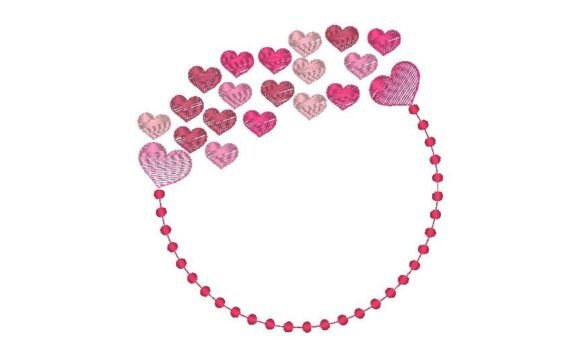
When I opened the Wreath with Hearts embroidery file, I didn’t see just another floral wreath—I saw a quiet moment of warmth. The shape is round but relaxed, not rigid or overly symmetrical. Hearts nestle naturally among leaves and subtle florals, not as afterthoughts but as integral rhythm points. It’s not fussy, yet it’s detailed enough to hold attention at 8 inches across—and still reads clearly at 4 inches. That balance makes it unusually versatile for both delicate baby items and bold tote bag designs.
A Real Project Test: Custom Embroidered Kitchen Towels for a Boutique Launch
Last month, I used Wreath with Hearts on a batch of linen-cotton tea towels for a local kitchen boutique. We stitched it centered just below the top hem, using soft ecru thread on oat-colored fabric. The result? Instant cohesion—no extra text needed. Customers kept picking them up, turning them over, commenting on how “handmade but polished” they felt. That’s the quiet strength of this design: it doesn’t shout; it invites. It works because the hearts are spaced generously, the leaf stems flow without tangling, and the overall stitch density avoids that stiff, plasticky look some dense fill-stitch wreaths develop after washing.
Where It Shines (and Where It Asks for Care)
Wreath with Hearts excels in projects where emotional resonance matters more than flash—think personalized baby blankets, wedding guest towels, nursery wall hangings, or small-batch aprons for bakeries and florists. On sweatshirts and structured tote bags, it holds its shape beautifully with medium-weight cutaway stabilizer. As an embroidered patch, it stitches cleanly with satin-stitch edges and minimal jump stitches.
But let’s be practical: avoid pushing it into tight spaces. On curved surfaces like cap fronts, test first—the outer curve of the wreath may distort slightly if hooping isn’t precise. On stretchy knits (like lightweight t-shirts), use tear-away + light cutaway and reduce top tension slightly to prevent puckering around heart outlines. And on dark fabrics? Double-check your thread colors: lighter tones (ivory, blush, sage) lift the design gently, while stark white can feel clinical unless balanced with tonal greens or dusty pinks.
What It Does for Your Craft Business—Beyond Stitching
As an Etsy seller and small shop product developer, I pay close attention to how a machine embroidery design affects perceived value—and Wreath with Hearts consistently lifts it. Its gentle asymmetry reads as intentional, not accidental. That tells customers you care about craft, not just speed. When paired with natural fibers and thoughtful presentation, it turns a basic tea towel into a keepsake. For holiday embroidery or wedding gifts, it adds sincerity without cliché—no lace borders or glitter fonts required.
It also scales well across branding touchpoints. I’ve used it as a subtle motif on packaging tags, adapted it into a printable mockup for client approvals, and even simplified one heart-and-leaf cluster for a minimalist logo lockup—all without losing its core voice. That adaptability is rare in Floral Wreaths.
Designer Notes You’ll Actually Use
- Always test on scrap fabric first—especially if pairing with textured weaves like burlap-blends or slubbed linen.
- Review stitch density visually before stitching large batches. Dense fill areas near heart centers should breathe—not bulge.
- Confirm hoop size compatibility. This design feels most at home in 5x7" or larger hoops. If you’re working with smaller hoops, check whether the vendor offers a scaled-down version—or plan to reposition elements manually.
- Inspect small details in black-and-white mockups. Some hearts include fine running-stitch accents that vanish on low-contrast fabric unless thread choice is deliberate.
- Use proper stabilizer for your base: cutaway for knits and heavy wear items, tear-away for stable wovens like quilting cotton or twill.
- Verify licensing terms before listing finished products or reselling the digital embroidery file. Commercial use rights aren’t automatic—even for seemingly simple Embroidery designs.
- Compare light vs. dark background mockups side by side. What reads as romantic on cream may feel washed out on charcoal unless thread saturation is adjusted.
Who It’s Truly For—And Who Might Want to Pause
This is ideal for craft business owners who sell handmade product with quiet confidence—not loud trends. Think apparel decorators building a cohesive seasonal line, Etsy sellers curating heartfelt baby embroidery bundles, or boutique owners sourcing small-run kitchen and nursery decor. It’s also strong for creative entrepreneurs launching their first embroidery-based digital product: clean lines, clear focal points, and intuitive flow make it easy to style in photos and mockups.
It’s less ideal if you specialize in high-detail photorealistic applique design or ultra-minimal single-outline motifs. And if your workflow relies heavily on tiny hoop sizes (<4x4") or ultra-fast production on unstable fabrics, you’ll need to adapt carefully—this design earns its charm through considered spacing and gentle dimension, not speed or shrink-to-fit convenience.
Final Thought: It’s Not Just a Wreath—It’s a Mood Anchor
In a landscape full of busy, over-digitized embroidery files, Wreath with Hearts stands out by doing less—and meaning more. It doesn’t try to be everything. It’s not a holiday-only motif, nor does it lean hard into romance or nostalgia. Instead, it offers grounded warmth: the kind that fits equally well on a child’s onesie, a chef’s apron, or a linen pillow cover folded neatly on a shelf. That versatility isn’t accidental—it’s built into the layout, pacing, and restraint of the original digitizing.
For designers, sellers, and makers who believe handmade product should feel intentional—not just decorated—Wreath with Hearts is worth keeping in your active rotation. Just remember: let it breathe, choose thread with care, and always stitch with the end user in mind—not just the file.