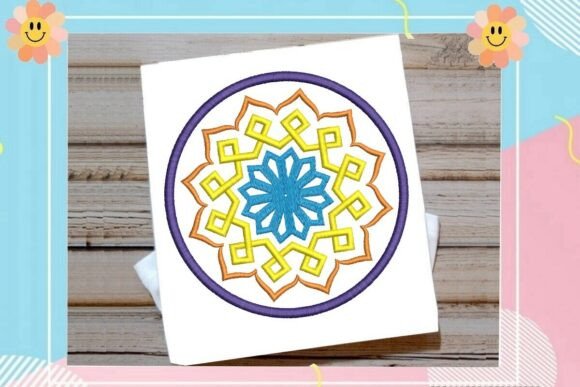
Islamic Key Mandala
A Designer’s First Glance: Grace, Geometry, and Quiet Confidence
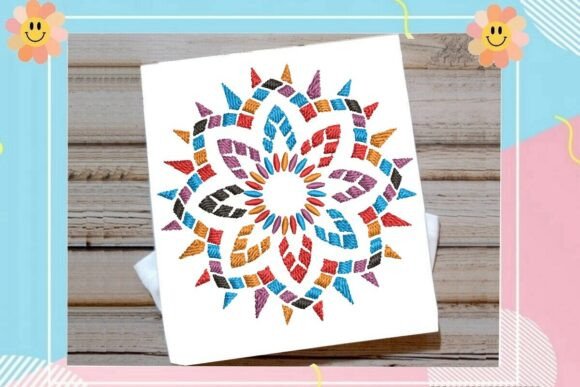
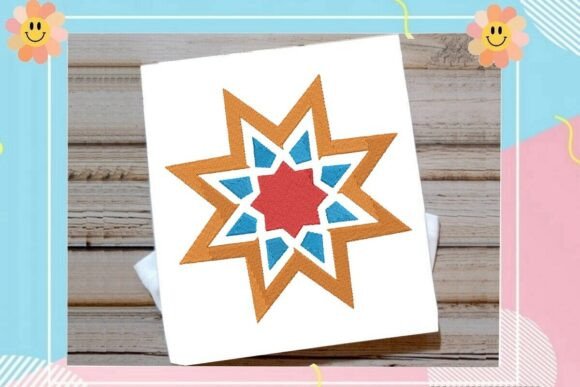
When I opened the Islamic Key Mandala embroidery file, what struck me wasn’t just symmetry—it was intention. This isn’t a busy filler motif or a trendy reinterpretation; it’s a grounded, rhythmic composition rooted in traditional line work. The interlocking key patterns flow into concentric circles with measured restraint—no overcrowding, no visual shouting. It feels calm but not cold, sacred but not stiff. As a designer who regularly selects motifs for boutique home decor and personalized gifts, I immediately saw its quiet strength: this is a design that centers without dominating, honors tradition without leaning on cliché, and reads clearly even at modest sizes.
Where It Lives Best: Real Projects, Real Customers
Last week, I tested Islamic Key Mandala on a linen-cotton tea towel for a local kitchenware shop’s holiday collection. Centered just below the top hem, stitched in matte ecru thread on oat-colored fabric, it transformed a simple towel into something tactile and intentional—like a small ritual object you’d reach for every morning. That’s the sweet spot: Islamic Key Mandala shines in pieces where presence matters more than flash. Think pillow covers for a serene nursery, cotton aprons for artisan bakers, lightweight sweatshirts for mindful-wear brands, or minimalist tote bags sold at craft fairs. It also works beautifully as an embroidered patch—clean lines hold up well when cut and fused—and pairs thoughtfully with neutral palettes, natural fibers, and slow-made branding.
What Holds Up (and What Needs Care)
The design performs reliably across several common embroidery scenarios—but context is everything. On stable, medium-weight fabrics like quilting cotton, linen, or midweight knits (with proper cutaway stabilizer), the line work stays crisp and the negative space breathes. I’ve used it successfully on baby onesies (with tear-away + topping) and cotton kitchen towels—both washed repeatedly with no fraying or distortion. However, I’d pause before using Islamic Key Mandala on highly textured fabrics like bouclé or thick terry cloth—the fine inner geometry can blur. Same goes for very stretchy knits (think lightweight jersey): unless hooped with exceptional tension and stabilized with adhesive + cutaway, those delicate intersections risk puckering.
Dark fabrics? Yes—but choose thread with high contrast and test stitch density first. On black twill or navy denim, I switched to a slightly heavier weight rayon thread and reduced fill density by 10% in the outer rings. It kept clarity without stiffness. Curved surfaces like caps? Possible, but only if the mandala fits comfortably within a 4" hoop and avoids tight corners near the bill seam. For tiny items—baby headbands, mini patches, or keychain tags—I’d verify whether the smallest repeating unit remains legible after stitching. Not all mandalas scale down gracefully; this one does, but only down to about 3.25". Below that, some of the key-line definition softens.
Stitching Clarity = Customer Trust
Here’s what matters to buyers: they don’t see “stitch density” or “underlay”—they see whether the design looks handmade *and* professional. Islamic Key Mandala delivers that balance. Its balanced mix of satin and running stitches gives clean edges without looking machine-perfect in a sterile way. There’s enough variation in line weight and rhythm to feel human-made, yet enough precision to signal care. When customers receive a sweatshirt with this motif centered on the chest, they don’t wonder if it’s a print—they feel the intention behind each loop and turn. That perception directly lifts perceived value, especially for Etsy sellers pricing handmade products at $45–$85. It also reinforces brand consistency for small shops building a quiet, values-driven identity.
Practical Notes Every Designer Should Run Through
- Always test on scrap fabric first—especially with your exact stabilizer combo and thread brand. Linen behaves differently than cotton duck, and matte thread hides flaws less than glossy.
- Check thread color contrast early. A pale gold on cream linen reads warm and rich; the same thread on off-white canvas can vanish. Try it in grayscale mockups too.
- Review stitch density. If your machine tends to lay down heavy fills, consider reducing density 5–8% in the outer bands—this keeps drape intact on apparel.
- Confirm hoop size compatibility. Does the full design fit your most-used hoop without re-hooping? If not, plan for placement flexibility (e.g., centering vs. upper-left corner).
- Inspect small details at actual stitch-out size. Zoom in on the tightest key intersections—are they fully connected? No floating threads? No overlapping satin runs?
- Test on both light and dark backgrounds, and simulate how it’ll look in product photos. A design that pops on beige may disappear on charcoal.
- Use appropriate stabilizer: cutaway for knits and stretchy fabrics, tear-away for stable wovens, and always a light topping for napped or fuzzy surfaces.
- Verify licensing before selling finished items or bundling the Islamic Key Mandala as part of a digital embroidery bundle. Commercial use rights aren’t automatic—even for “boutique home decor” designs.
Final Thought: A Design That Earns Its Place
Islamic Key Mandala doesn’t chase attention—it invites return. That makes it unusually versatile for creative entrepreneurs: it supports thoughtful branding, elevates everyday objects, and carries quiet meaning without needing explanation. Whether you’re stitching a limited-run holiday pillow cover for your Etsy shop, creating custom embroidered patches for a yoga studio’s merch line, or designing a set of monogrammed tea towels for a wedding gift suite, this machine embroidery design earns its place—not because it’s flashy, but because it’s resolved, respectful, and ready for real use. Just remember: even elegant geometry needs grounding. Test, adjust, stabilize, and let the lines speak for themselves.