White Lily Cross Stitch
A Quiet Statement, Not a Shout
First glance at the White Lily Cross Stitch lands softly—no sharp angles, no busy borders, just a single lily rendered with graceful symmetry and restrained detail. At 191 x 220 stitches, it’s compact enough for intimate pieces but carries enough presence to anchor a larger composition. It doesn’t scream “look at me.” Instead, it invites pause: a breath of calm, a nod to tradition without stiffness. That’s its strongest asset—not versatility in scale, but clarity in intent. I immediately pictured it centered on a linen tea towel for a boutique kitchen line, or stitched delicately onto the chest pocket of a baby romper. Not as filler, but as focus.
Where It Lives Best (and Why)
In real project use, the White Lily Cross Stitch shines where subtlety equals sophistication. I tested it conceptually across several common craft business applications—and here’s what held up:
- Tote bag design: Perfect for the front panel of a natural canvas or unbleached cotton tote. Its balanced proportions avoid distortion when stitched on slightly curved surfaces, and the clean lines read clearly even from arm’s length.
- Baby embroidery: Ideal for onesies, burp cloths, or crib blankets. The floral motif reads gentle and timeless—not cutesy or dated—and the moderate stitch count keeps production time predictable for small-batch makers.
- Pillow cover & apron accents: Works beautifully as a singular focal point rather than part of a cluster. On textured linen or medium-weight cotton, the cross stitch texture complements fabric grain instead of fighting it.
- Holiday or wedding gift: Paired with ivory thread on oatmeal linen, it reads heirloom-quality. No embellishment needed—its elegance is self-contained.
It’s also a quiet winner for Etsy sellers offering minimalist handmade product bundles: think a matching tea towel + oven mitt set, each featuring the same lily in different placement. Consistency feels intentional, not repetitive.
Where Caution Is Built In
This isn’t a design that forgives every surface or context. Its strength—refined simplicity—also defines its limits. Use thoughtfully in these cases:
- Small hoop sizes (under 4”): While the dimensions are modest, the lily’s petal definition relies on clear stitch spacing. Below ~3.5”, fine details may blur, especially on loosely woven fabric.
- Stretchy or thin fabrics (like jersey or voile): Cross stitch relies on stable tension. Without proper stabilizer—and often a tear-away *plus* light cut-away—the delicate stem and outer petals can pucker or shift. Not impossible, but not beginner-friendly here.
- Dark fabric backgrounds: The design assumes contrast. On charcoal or navy, you’ll need bright white or ecru thread to maintain legibility—not an issue, but one to confirm before stitching. Always test thread color against your final fabric swatch.
- Curved surfaces (caps, curved pockets): The lily’s vertical orientation means it adapts less readily to domed areas than a circular or radial motif would. Consider it for flat panels first.
What It Adds to Your Finished Product—Beyond Aesthetics
The White Lily Cross Stitch quietly elevates perceived value. Customers don’t just see a flower—they register care, intention, and quiet confidence in the maker’s eye. That translates directly to trust: a $48 linen pillow cover feels worth the price when this lily anchors it, not because it’s flashy, but because it signals restraint and skill.
For craft businesses, it supports brand consistency without demanding rigid repetition. You can use it across categories—baby items, kitchen goods, gifting—while maintaining a cohesive visual language. And because it’s rooted in classic cross stitch rhythm (not dense fill or satin stitch), it photographs well in natural light for printable mockups and social previews—no glare, no shadow traps.
Importantly, it avoids trend fatigue. Unlike motifs tied to seasonal themes or internet micro-trends, the white lily reads timeless. That means your Etsy listing stays relevant longer, your holiday stock converts into spring inventory, and your boutique branding feels grounded—not reactive.
Practical Designer Notes Before You Stitch
Before cutting fabric or loading your hoop, run through these checks:
- Test on scrap fabric first—especially if using textured linen or blending thread colors. See how the petal edges hold.
- Review stitch density visually. At 191 x 220, it’s moderate—but zoom in on the center pistil area. Does it feel tight? If so, consider reducing thread weight (e.g., 2-ply instead of 3-ply) for better flow.
- Confirm hoop size compatibility. You’ll likely need at least a 5” hoop for comfortable handling, given the shape’s height-to-width ratio.
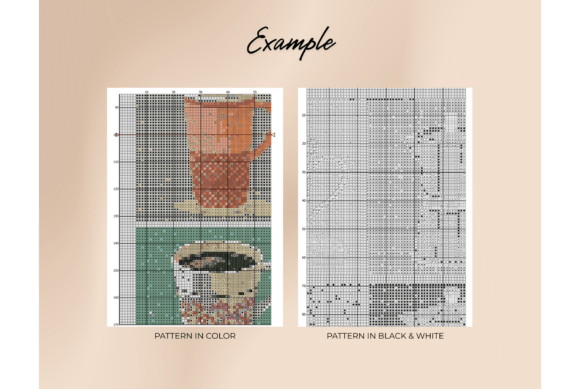
- Inspect small details in black-and-white mockup. Some subtle shading in the original may disappear on dark backgrounds—adjust thread contrast accordingly.
- Use appropriate stabilizer. For apparel or lightweight home goods, a medium-weight tear-away works. For stretchy or unstable fabric, add light cut-away underneath.
- Verify licensing scope. As a digital embroidery file in the Cross Stitch Patterns category, confirm whether commercial use (selling finished embroidered products or digital assets) is permitted. Don’t assume.
And one last note: this design earns its keep not by doing everything, but by doing one thing exceptionally well—offering quiet, confident elegance. Let it breathe. Give it space. Pair it with thoughtful materials, not competing elements. That’s where the White Lily Cross Stitch transforms from pattern to presence.